
European Christmas-market trips can look similar online, but they are quite different once hotel location, winter weather, crowds, and travel time are considered. The best destination depends on how the traveler wants to spend each day and evening.
A practical plan starts with four questions: what kind of evening the traveler wants, how much city sightseeing matters, how far the hotel is from the planned activities, and how many nights are available. These answers make the destination comparison more useful.
Vienna, Strasbourg, Nuremberg, and Copenhagen each suit a different type of trip. The sections below compare their atmosphere, recommended length, hotel considerations, and routing options so travelers can see the practical differences.
Start With the Type of Evening You Prefer
Most Christmas markets become livelier after dark, which arrives early in Central and Northern Europe in December. Late arrivals, hotel changes, and long transfers can therefore take away a large part of the time travelers expected to spend at the markets.
Before choosing a city, decide which of these evenings sounds most appealing:
A concert and a late dinner after Vienna’s larger markets.
A compact medieval center where most of the evening stays within walking distance.
A family outing with skating, lights, and a quick return to the hotel.
The preferred evening helps narrow both the city and hotel location. It also shows which reservations and transport arrangements need to be planned in advance.
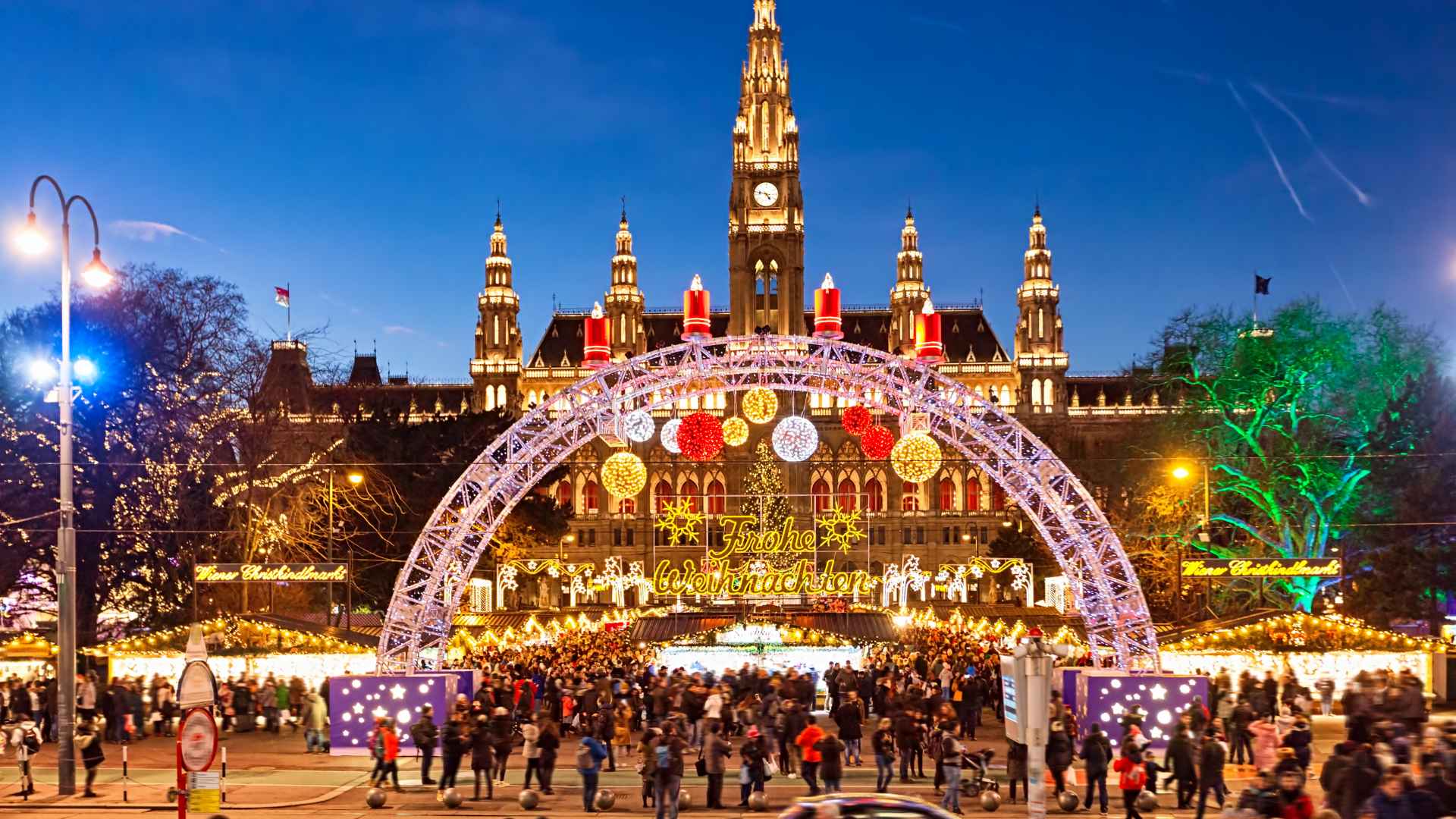
Vienna Works Best for Travelers Who Want More Than One Festive Mood
Vienna works well for travelers who want Christmas markets alongside museums, concerts, restaurants, and broader city sightseeing. Its markets range from large civic squares to smaller neighborhood settings, so several evenings can feel different without changing hotels.
How Vienna’s Markets Change Each Evening
Vienna does not revolve around one central market. Its official tourism information lists several, from grand civic settings to smaller neighborhood gatherings. That variety gives each evening a different texture. Pair one headline market with a quieter artisan setting, then keep another night for music or dinner.
Where to Stay and How Long to Give Vienna
Let the evening plan guide the hotel choice. Staying in or near the Innere Stadt supports first-time sightseeing and easy walks. Still, the most famous address may not be the most useful. A hotel just beyond the busiest squares can offer quieter nights while staying close to trams and the U-Bahn. Ask about room orientation too. A street-facing room and a courtyard room can produce very different nights.
Four nights is a sensible starting point for Vienna when museums, a concert, and several markets matter. Three can work for a focused return visit. Adding Salzburg is possible, but the route should earn the hotel change. Travelers who mainly want Vienna’s cultural depth may enjoy the trip more by staying put and using the extra day locally.
Strasbourg Is for Travelers Who Want Christmas to Be the Main Event
Strasbourg delivers a more concentrated festive experience. Markets occupy multiple squares around the historic center, including the cathedral area, Place Kléber, Place Broglie, and Petite France. The official Christmas site also emphasizes local producers, crafts, food, and a light route connecting several districts.
Plan Strasbourg Hotel Access Before Arrival
The concentrated setting is part of Strasbourg’s charm and its challenge. Weekends and the hours after sunset can bring heavy foot traffic. A hotel may look close on a map yet feel awkward with luggage, pedestrian controls, or restricted vehicle access. Before booking, confirm the arrival route and the walk from the nearest practical drop-off point.
How Many Nights to Give Strasbourg
Three nights usually gives Strasbourg enough breathing room. Two can work, but arrival time becomes decisive. One delayed train or flight can consume much of a short stay. Four nights suits travelers adding Colmar or smaller Alsatian towns. A day trip protects continuity, while a second base creates better early and late access. They solve different problems.
Strasbourg is currently finalizing its next official program, so exact hours and access rules should be checked against the city’s Christmas website before travel. That is a normal part of seasonal planning, not a detail to leave until arrival.
Nuremberg Suits Travelers Who Value Tradition and a Compact Center
Nuremberg offers a focused German market experience with a clear sense of place. The official Christkindlesmarkt runs from November 27 through December 24, 2026, in and around the Hauptmarkt. Its wooden stalls, regional foods, and opening traditions create a different mood from Vienna’s citywide variety.
Choose the Room for Sleep Before the Postcard
Nuremberg’s compact center suits a shorter stay, but compact does not mean quiet. A central room reduces evening transportation. Its exact position may also expose the traveler to market noise. Light sleepers should ask about orientation instead of assuming every room in the category feels the same.
Give Nuremberg Time to Settle In
Two or three nights can be enough when the Christkindlesmarkt is the main reason for traveling. A one-night stop often becomes a rushed arrival, one crowded evening, and an immediate departure. A one-night stop leaves little time for delays, a relaxed meal, or a second visit at a quieter hour.
Nuremberg can pair naturally with Munich by rail, but the combination should not become a race between check-ins. A longer stay in one city, with a deliberate day excursion, may preserve more useful time than two short hotel stays.
Copenhagen Fits Travelers Who Want Design, Food, and Family-Friendly Energy
Copenhagen offers a different expression of the season. Tivoli Gardens is often the visual anchor, while the wider city adds design, restaurants, decorated streets, and waterfront neighborhoods. This can be especially appealing to families or travelers who want festive evenings without making traditional market shopping the entire purpose of the trip.
Match the Hotel to Copenhagen’s Winter Rhythm
A property near Tivoli can simplify late returns, especially with children. Travelers planning around restaurants and neighborhood time may prefer another part of the center. Winter also changes what “walkable” means. A route that feels easy in June can feel much longer in wind, rain, or sleet.
Decide Whether the Fourth Night Belongs in Copenhagen
Three or four nights gives Copenhagen room to work as a city break. The fourth night becomes valuable when restaurants, museums, and slow mornings matter. Malmö looks temptingly close across the Øresund. Still, an extra country should earn its day, not enter the itinerary because the train makes it possible.
Official seasonal calendars should be reconfirmed before booking timed plans. Opening periods can differ among Tivoli, individual markets, shops, and museums, particularly around Christmas Eve and Christmas Day.
Choose the Destination by Its Tradeoffs, Not Its Reputation
All four cities can look persuasive in photographs. Their practical differences become clearer when the trip is matched to the traveler’s priorities.
Vienna suits travelers who want Christmas woven through a major cultural city.
Strasbourg suits travelers who want the festive season to lead the whole trip.
Nuremberg suits a shorter stay centered on tradition and a compact old town.
Copenhagen suits travelers balancing seasonal atmosphere with food, design, and family time.
The right choice may also depend on what comes before and after. Vienna can anchor a longer Central European itinerary. Strasbourg may connect well with Paris or Switzerland. Nuremberg can sit within a German rail journey. Copenhagen can work as a self-contained northern city break. Routing should make the experience easier, not merely add another pin to the map.
Put the Hotel Where the Evenings Will Happen
In summer, a fifteen-minute walk may feel incidental. In December, that same distance can shape every return to the hotel. Cold, rain, uneven streets, shopping bags, and early darkness make hotel geography more consequential.
Use the evening itinerary as the hotel test. Four questions expose the friction that a map can hide.
Can everyone return without a long transfer?
Will winter walking still feel realistic after dinner?
Does the available room solve the family’s real needs?
Will street noise or market crowds affect sleep?
Room category is part of this decision. Families may need genuinely connecting rooms rather than rooms described as “nearby.” Couples staying several nights may value a seating area and natural light. Travelers sensitive to noise may prefer a courtyard outlook over the postcard view. At The Edited Traveler, these details are considered within the larger itinerary through our travel-planning services, rather than treated as an afterthought once the hotel has been chosen.
Protect the First and Last Evenings
Seasonal trips are short, so a poorly timed arrival can steal the moment everyone came to experience. An overnight flight, an uncertain room, and a fully scheduled evening rarely make a generous beginning. An early departure can cast the same shadow over the final night.
Give the First Evening Room to Breathe
Keep the first evening simple when possible. Allow time to check in, warm up, and walk to one nearby market without a timed commitment. Save the concert, special dinner, or guided experience for the second night. That small choice leaves room for jet lag, weather, and the pleasure of arriving.
Protect the Final Full Evening
Departure timing deserves the same care. Many markets close by Christmas Eve, and holiday hours vary. Travelers who want the full atmosphere should not assume it continues unchanged through Christmas week. Let current official calendars guide the dates, then protect the final full evening from unnecessary transit.
Avoid Building an Itinerary From Market Names Alone
The most common planning mistake is collecting famous markets as if each were a separate museum. A route of Vienna, Prague, Dresden, and Nuremberg may look festive, yet repeated packing and rail days can reduce the evenings that made the trip appealing.
A route connecting luxury Christmas markets in Europe should use contrast. One larger cultural city can pair with one compact festive center. A countryside stay may provide relief from crowded squares. In other cases, one city is enough. The traveler can experience several market styles without changing hotels at all.
Online lists can help travelers discover markets, but they rarely show how several choices will work together. A travel advisor can help compare routes, hotel locations, room needs, and the time lost with each additional stop.

Plan Around Crowds Without Over-Scheduling
Crowds are part of the experience at popular Christmas markets, especially on weekends and after dark. The aim is not to avoid every busy period, but to balance the main markets with quieter times, smaller locations, and reservations that reduce unnecessary waiting.
As a starting point, weekdays often feel different from Friday and Saturday nights. Early evening works well for families. Later reservations may suit adults who prefer the main squares after day visitors leave. In Vienna and Strasbourg, a smaller market can also give the trip a quieter counterpoint.
Still, leave one evening flexible. Weather, energy, and a local recommendation can change what sounds good. Sometimes a warm restaurant table becomes more appealing than one more market. The itinerary should allow that choice without making anyone feel they have missed the trip.
Decide Which Comforts Matter Most
On this type of trip, practical comforts often matter more than elaborate extras. A quiet room after an overnight flight, clear winter arrival instructions, and a restaurant near the evening market can make the trip easier.
Good planning also reduces decisions during the trip. Travelers know where they are going, how they will return, and which activities are optional. The Edited Traveler’s Signature Escapes bring the hotel, room, route, reservations, and pace into one plan built around the client’s priorities.
Frequently Asked Questions
Which European Christmas Market Is Best for a First Trip?
Vienna is a strong first choice because it combines several market styles with museums, music, restaurants, and reliable city transportation. Strasbourg may suit travelers who want Christmas itself to be the central experience and prefer a compact historic setting.
How Many Nights Do You Need for a European Christmas Market Trip?
Plan at least three nights for most cities so arrival delays or winter fatigue do not consume the experience. Vienna and Copenhagen often reward four nights, while Nuremberg can work in two or three when the route remains simple.
Should You Visit More Than One Christmas Market City?
Two cities can work when rail connections are straightforward and each destination offers a distinct experience. Adding more stops often trades festive evenings for packing, checkout, transit, and another arrival, so every hotel change should justify its cost in time.
When Should You Book a Luxury Christmas Market Trip?
Begin planning several months ahead when room category, connecting accommodations, specific hotels, or weekend dates matter. Seasonal calendars can be released later, so secure the right trip framework first and confirm event hours before finalizing timed activities.
Where Should You Stay for Europe’s Christmas Markets?
Stay where the evening itinerary will happen, with realistic attention to winter walking, vehicle access, and noise. The most famous hotel is not always the best fit if its location adds friction or its available room category weakens the stay.
Plan a Christmas-Market Trip Around Your Priorities
A well-planned Christmas-market trip leaves enough time for the experiences the traveler values most, whether that is an evening concert, regional food, family activities, or several markets within one city. The route and hotel should make those priorities easier to enjoy.
The Edited Traveler plans European holiday trips by comparing destinations, hotels, room categories, transfers, reservations, and realistic travel times. Explore our travel-planning services or contact us to discuss the type of December trip you are considering.
The Edited Traveler
Let’s plan your trip
Tell me where you want to go, who is traveling and what matters most. I’ll come back with hand-picked hotels, VIP perks where available (often upgrades, daily breakfast and hotel credits) and a plan built around how you like to travel.
Not ready yet? Get the free VIP hotel perks guide. Prefer email? Write to Jared@TheEditedTraveler.com.
Jared Goldstein, Founder and Lead Advisor, Los Angeles.