
Your dog is family. So are the hotels, airlines, and ground partners who treat them that way. This is a curated approach to traveling with your pup — semi-private flights, five-star stays across the country and abroad, and the kind of advisor-only extras that turn a trip into something memorable for every member of the household.
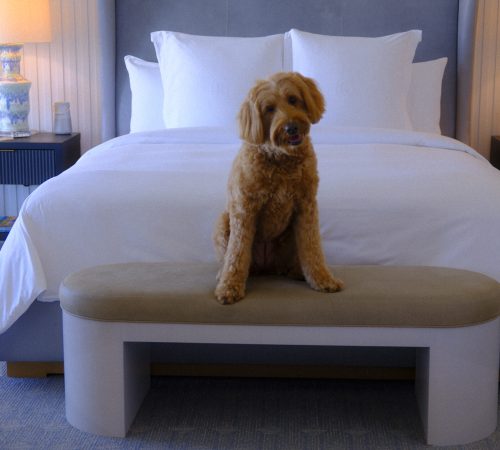
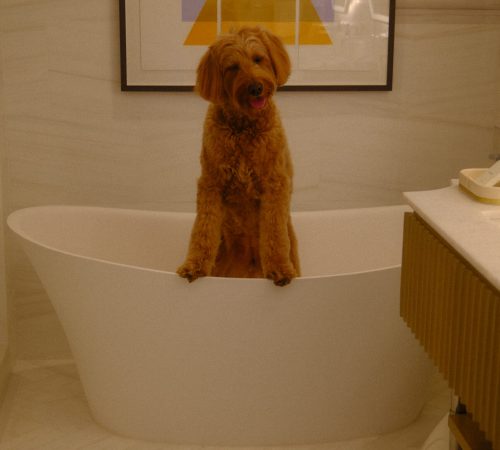
Most pet-friendly travel advice stops at “this hotel allows pets.” That isn’t the brief here. As a luxury travel advisor with preferred partner status across the world’s leading hotel brands, I plan trips where your dog is welcomed with the same intention as you are — a tailored bed waiting in the room, a pet menu at turndown, a concierge who already knows your walker’s name.
My own goldendoodle, Bailey, has shaped this specialty. Every recommendation on this page has been pressure-tested against the way real dog owners travel — the early walks, the long transfers, the quiet rooms for an anxious pup, the pre-arrival conversations that make everything easier on day one.
Rosewood Elite · Four Seasons Preferred · LHW
JSX is a semi-private air carrier that operates out of private terminals — no long security lines, no cramped gate areas, no checked-luggage anxiety for your dog. It’s the closest thing to chartering a jet without the price tag, and their pet policy is the most generous of any scheduled carrier in the United States.
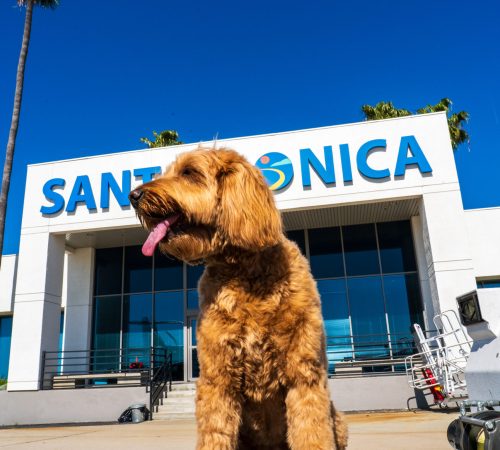
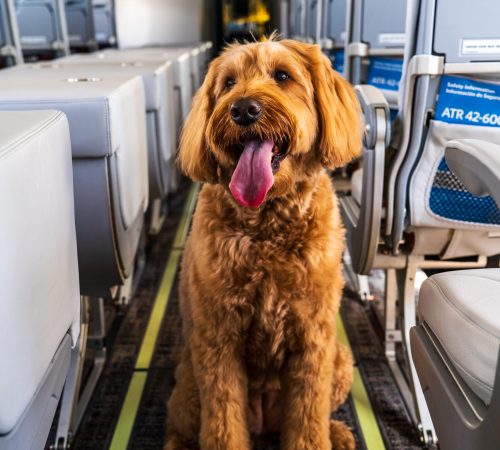
JSX permits a maximum of five dogs in the cabin on any given flight — first-come, first-served at booking. Because the aircraft seats only thirty passengers, that means a meaningful share of every flight is set aside for four-legged travelers.
Dogs under 30 lbs fly in an approved under-seat carrier for a flat fee each way. On longer flights, well-behaved small dogs may rest on your lap outside of taxi, takeoff, and landing.
Dogs up to 80 lbs are welcome on the cabin floor when you purchase the adjacent seat — leashed to the seat frame during taxi, takeoff, and landing. This is the policy that makes JSX genuinely unique; almost no other U.S. carrier allows a large dog to travel in the cabin without a service-animal designation.
Note: JSX pet reservations are handled by phone and require a signed liability form. Because of the five-dog limit, I recommend booking as early as possible — particularly on peak Friday, Sunday, and holiday routes. I’m happy to coordinate the booking on your behalf.
JSX serves roughly 28 airports across the western and eastern United States, plus one international route to Los Cabos. These are the destinations where the flight experience and the on-the-ground stay both rise to the standard your dog deserves — and where I can book the hotel portion with advisor-added benefits.
Wine-country estates with acres of vineyard walking, outdoor cellar-door tastings where dogs are welcome, and patios built for long afternoons. JSX recently launched Santa Monica–Napa service on its ATR turboprops.
Desert resorts with puppy gardens, pet concierges, and shaded walking trails. Best in spring and fall when mornings are cool enough for sunrise walks.
High-desert air, adobe courtyards, and walkable historic plazas. One of the most dog-welcoming small cities in the country.
Often overlooked as a dog destination — but Summerlin offers pet-first resort acreage, and many Strip-adjacent luxury hotels maintain dedicated pet programs with 24-hour relief areas.
Fly into Reno, drive 45 minutes. A rare destination where both winter ski towns and summer shoreline properties welcome large dogs in-room with genuine enthusiasm.
Gunnison opens up Crested Butte in winter and the greater Aspen–Snowmass corridor by ground transfer — mountain towns where dogs are, candidly, a local accessory.
Often overlooked as a dog destination — but Summerlin offers pet-first resort acreage, and many Strip-adjacent luxury hotels maintain dedicated pet programs with 24-hour relief areas.
Beyond the JSX network, international trips are entirely possible with the right planning — but the paperwork is unforgiving, the timing is precise, and the rules changed meaningfully in 2026. Start at least ninety days before departure. For complex routes and multi-country itineraries, six months is safer.
Implanted before the rabies vaccination. If your dog has an older 9-digit chip, you’ll need a second ISO chip or your own scanner to travel.
Administered at least 21 days before travel for EU entry. A booster counts immediately only if the previous vaccine never lapsed. For a first-ever vaccine, the 21-day wait is the single biggest timeline bottleneck.
Issued by a USDA-accredited veterinarian and endorsed by USDA APHIS. For the EU, this is the EU Animal Health Certificate (not a “pet passport” — those are only issued to EU-resident pets). The certificate is typically valid for 10 days to enter the destination.
As of 2024, all dogs entering or returning to the United States require a CDC Dog Import Form receipt. Dogs must be at least six months old. Additional CDC rules apply for dogs arriving from rabies high-risk countries.
Destination requirements change frequently. The summaries below are a planning starting point, not a substitute for confirmation with a USDA-accredited veterinarian closer to departure.
Microchip, rabies vaccination with the 21-day wait, and a USDA-endorsed EU Animal Health Certificate issued within 10 days of entry. The April 2026 EU regulation update tightens enforcement on document sequencing and microchip authentication, so precision matters. Valid for four months of EU travel once you arrive.
Post-Brexit, the UK runs its own checks. U.S. dogs need the GB Animal Health Certificate issued by a USDA-accredited vet and endorsed by USDA APHIS. Heathrow and other ports of entry have dedicated animal-reception processes that are straightforward but not quick.
One of the strictest systems in the world. Requires two rabies vaccinations, a FAVN titer blood test, and a 180-day waiting period between the qualifying blood draw and entry. Advance notification to Japanese quarantine authorities is mandatory at least 40 days before arrival.
Extensive rabies titer testing, import permits, and mandatory post-arrival quarantine (typically 10 days in Melbourne for Australia). Not impossible — but exceptional planning is required, and most travelers choose a pet relocation specialist for these routes.
Mexico has simplified requirements for dogs in good health — typically no USDA endorsement needed for short trips, but a recent veterinary health certificate is required. Caribbean requirements vary sharply by island; some are as simple as Mexico, others require advance import permits.
From the UAE to Thailand to South Africa, each country sets its own rules and changes them without notice. The USDA APHIS Pet Travel site maintains current country-specific requirements, but confirmation with an accredited veterinarian is essential for every trip.
These are the hotel brands I book most often for clients traveling with dogs. Each has built a dedicated pet program — not an afterthought, but a reflection of the way their best guests actually live. Where I hold preferred-partner status, I can layer complimentary benefits (upgrades, breakfast, resort credits, early check-in) on top of the pet amenities below.
Four Seasons’ pet-friendly properties operate under a unified hospitality philosophy: your dog should be pampered to the same standard you are.
Rosewood’s “A Sense of Place” ethos extends to its pet program — and, as a Rosewood Elite advisor, meaningful add-on benefits on every stay.
Mandarin Oriental properties — particularly Boston, Paris, and Washington — have built reputations for some of the most theatrical pet experiences in the business.
Some of the most characterful pet-friendly stays sit within Leading Hotels of the World — independent properties from Lake Como to the Cotswolds to the Amalfi Coast.
Any website can sell you a pet-friendly room. A luxury travel advisor who actually understands pet travel does something fundamentally different: they protect your trip from the small things that go wrong when a dog is in the itinerary. These are the specific places my work creates value.
Ground floor, away from elevators and ice machines, close to grass, corner rooms for quieter sleep. The hotel will assign something when you book direct — I’ll assign the right thing before you arrive.
Direct communication with each property’s pet coordinator: the bed set up before you walk in, dietary requirements flagged, any medications stored at the concierge, breed-specific requests (grooming brushes for doodles, cooling mats for short-nosed breeds) handled in advance.
JSX operates a semi-private network of roughly 28 airports across the western and eastern U.S. and one international route to Cabo San Lucas. The most popular dog-friendly destinations on the network include Napa Valley, Scottsdale, Santa Fe, Aspen-gateway Gunnison, Lake Tahoe via Reno, Palm Beach, Miami via Opa-locka, the Hamptons via Westchester, and Cabo. See the destinations section above for paired hotel recommendations.
Yes, but the April 22, 2026 EU regulation update tightens enforcement on microchip, rabies, and document sequencing. U.S.-based dogs need an ISO-compliant microchip, a primary or booster rabies vaccine given at least 21 days before travel, and a USDA-endorsed EU Animal Health Certificate issued within 10 days of entry. The certificate is valid for 4 months of EU travel once you arrive, or until the rabies vaccination expires — whichever comes first.
Four Seasons, Rosewood, Mandarin Oriental, and many Leading Hotels of the World properties are the standouts. Programs range from Four Seasons’ Very Important Pet (VIP) amenities, to Rosewood’s heritage-brand pet kits, to Mandarin Oriental’s pampered-pup spa experiences and chef-designed pet menus.
Submit a complimentary planning inquiry through the intake form below. I’ll follow up within 24 hours to talk through your dog’s needs, your travel dates, and the right mix of properties, flights, and on-the-ground logistics.
Share a few details about your travel dates, destinations, and your dog. I’ll reach out within twenty-four hours with a tailored plan.